

THE AFTERCARE TEAM
-

Like all surgeons, I’m always 100% focused on the patient I’m treating. Care teams looking after my other patients need clear instructions. If they’re confused, I’m forced to shift focus from my current patient so I can help them. An extensive support network allows me to help carers and protect the patient in front of me.
-
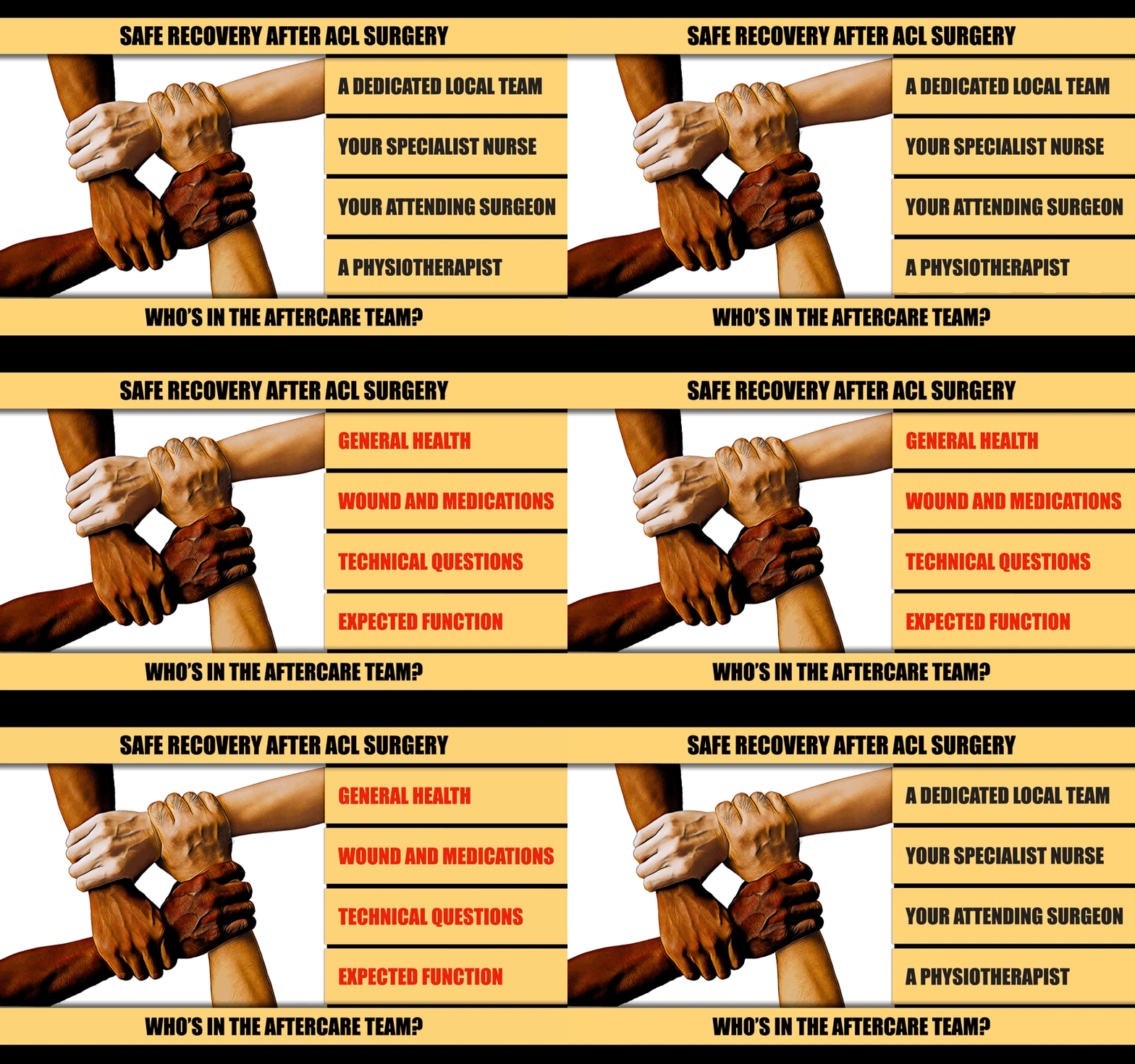
Your local team know your pet better than anyone except you. They're your lifeline for general health questions. A typical surgical team has 4-6 members. Nurses and junior surgeons can answer questions about medications, exercise, and wound care. Save technical questions about the operation for your senior surgeon.
WHO SHOULD YOU TRUST?
Your team will supply detailed discharge instructions when you collect your pet. Complex instructions can be difficult to digest, regardless of the format. If you return home and have questions or concerns, what's the best way to get answers? Should you phone your pet's nurse or consult the internet?
-

The only source you can trust completely is your pet's personal aftercare team. They design bespoke written and verbal instructions which consider your pet's unique situation. Veterinary nurses combine years of training with a passion for animal welfare. Please call them if you don't understand the plan or you're worried about your pet. They will always want to help.
-

It's normal to feel anxious about asking for professional help. Online support groups were created for this reason. The challenge is knowing whose advice to trust. Shepherding a pet through ACL surgery makes someone experienced, but it doesn't make them an expert. An individual who doesn't know your dog can't offer patient specific advice about medications, activity, or wound care.
TYPICAL RECOVERY
Until now, I've used published data to guide you. This data speaks for itself, without any need for personal input. The following section is different because it describes expected function for my patients. Early function varies between surgery teams. Quantifying good surgical technique is surprisingly difficult. This, in turn, makes it difficult to prove a benefit. Even so, it's fair to assume that surgical technique affects recovery.
-

FACTORS LINKED TO A FASTER RECOVERY
1. Good surgical technique
2. Use of regional nerve blocks
3. Dogs with partial tears might recover faster
4. Dogs with normal menisci often recover faster
5. Trimming a torn meniscus improves pain quickly
-

DIFFERENCES AFTER BILATERAL SURGERY
1. Expect at least two nights in hospital
2. Epidural injections are mandatory
3. Early recovery is slower, especially in weeks 1-2
4. Aftercare instructions are similar
5. Average total recovery time is comparable
CONTACTING YOUR TEAM
Every aftercare team offers the open invitation, "Please call if you're worried". This instruction is ideal in principle, but it’s not always practical. A responsible carer is normally ‘worried’ for several weeks. A daily call to your aftercare team won’t improve the quality of your pet's aftercare. Preserving a good working relationship means learning when to call. This section addresses the question, "How will I know if something's wrong?" Normal variations preclude publication of a '‘rule book' describing what a setback looks like. As such, this section offers a guideline, and should not be treated as an ‘instruction manual’.
-
![]()
PROBLEMS IN THE FIRST 2 WEEKS
BEST CASE: Mild muscle injury
COMMONEST SETBACK: Surgical site infection
WORST CASE: Construct failure
COMMON TESTS: Wound swab; x-rays
-
![]()
PROBLEMS IN WEEKS 2-8
BEST CASE: Mild patellar tendinitis
COMMONEST SETBACK: Surgical site infection
WORST CASE: Construct failure
COMMON TESTS: X-rays and joint fluid culture
-
![]()
PROBLEMS AFTER WEEK 8
BEST CASE: Muscle injuries are rare
COMMONEST SETBACK: Meniscal injury
WORST CASE: Multi-resistant infection
COMMON TREATMENT 1: Keyhole surgery
COMMON TREATMENT 2: Implant removal


VIDEO INSTRUCTIONS
In human healthcare, patients who don't understand their instructions have higher complication rates. Poor comprehension increases the risk of hospital readmissions, medication errors and compromised aftercare. Most carers can't memorise a detailed verbal plan, especially when they're anxious. Written discharge instructions overcome this limitation, but they aren't flawless. Many human healthcare studies document limited understanding of written instructions. Video discharge instructions are proven to improve outcome. Better understanding can reduce post-surgical pain, anxiety and risk. Importantly, risk reduction is only possible if carers watch the entire video. In your case, this requires a time commitment of 20-25 minutes. The ideal moment to watch your videos is before you collect your pet. This gives you time to create an ideal recovery space and construct a question list for your team.
CONTENT: THREE VIDEOS
TOTAL VIEW TIME: 22 MINUTES


SPECIFIC VIDEO GUIDES
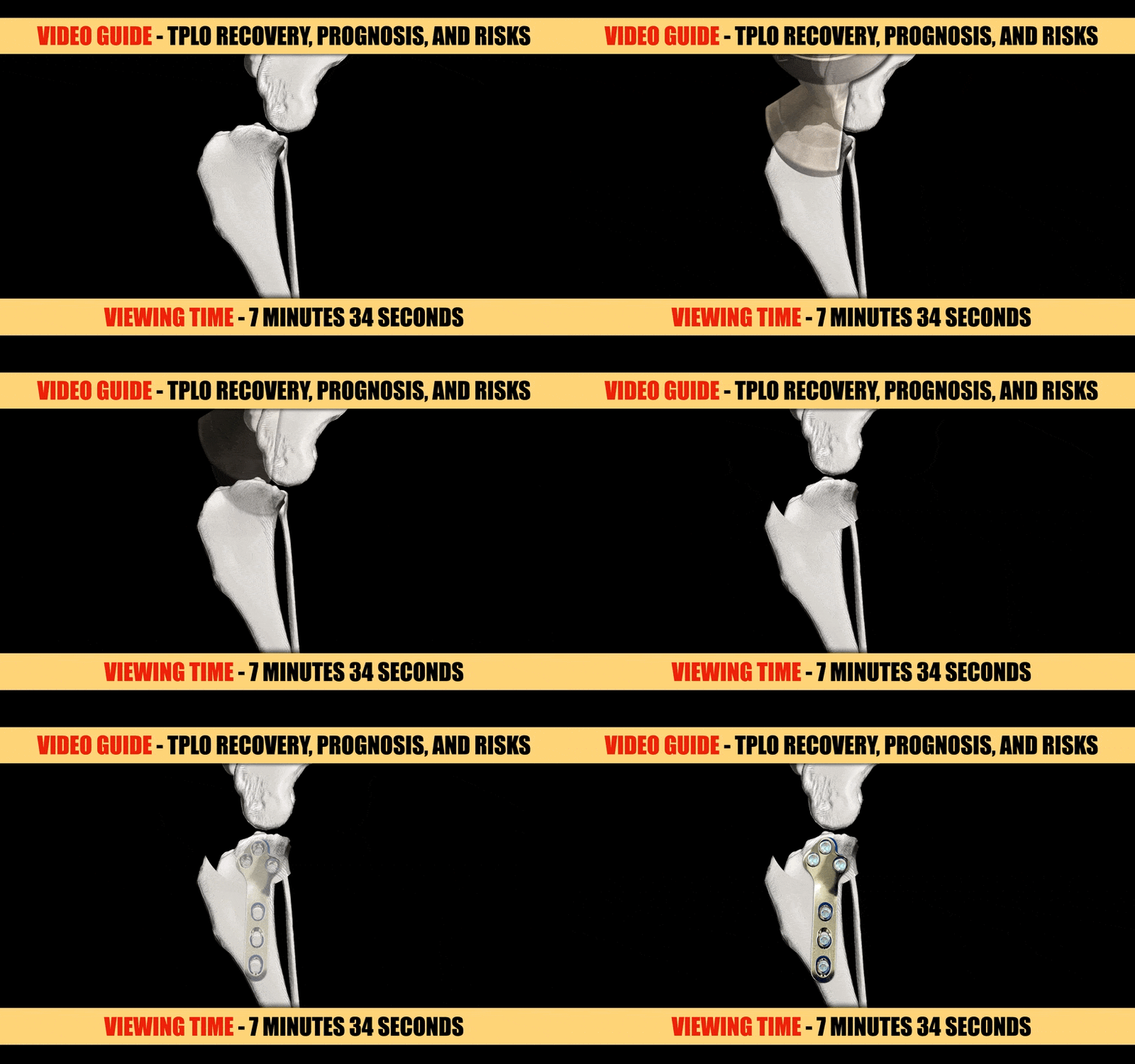
The next two video instructions explain TPLO aftercare. I recommend watching your relevant guide once or twice before collecting your dog. Here are links to video discharge instructions for other popular treatments: Closing wedge TPLO; CBLO; TTA; TTO; lateral suture or tightrope; and non-surgical management.

ORAL MEDICATIONS
Oral medications target pain and anxiety. Painkillers are described in their own chapter. The section below describes the second class of aftercare medications - calming drugs.
-
CALMING MEDICATIONS
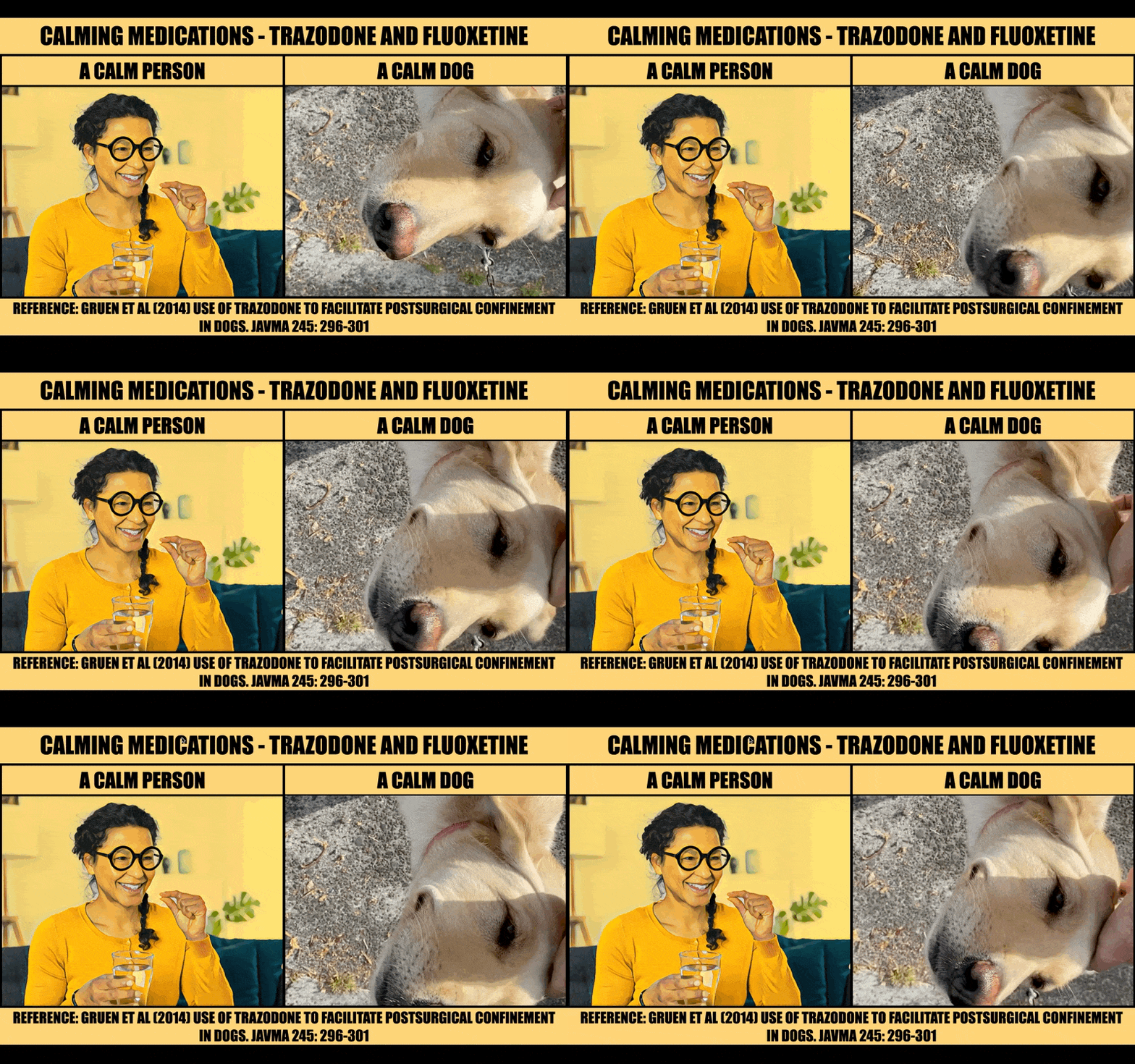
‘Calm’ and ‘sedate’ are not the same. Calmness enhances wellbeing, whilst chronic sedation impairs wellbeing. Antidepressants like trazodone and fluoxetine have a proven calming effect on dogs. They work by increasing levels of the happiness hormone serotonin.
-

ANTICONVULSANTS
There are two anticonvulsant drugs which have gained unwarranted popularity in veterinary practice. These are gabapentin and cannabidiol (CBD). Both have a common undesirable side-effect called somnolence. I've listed the adverse effects of both drugs in the pain control section.
IS A ‘CONE OF SHAME’ NECESSARY?
As consumers, you have a choice. You can choose to trust online testimonials or you can be guided by your aftercare team. Tap here to watch a 6-minute video about wound protection.
-

The story of the butterfly and the frog represents a popular attitude to wound protection. In this story, the butterfly lands on the frog nine times. Each time she lands, the frog does nothing. Was her choice of landing area 'safe' because she got away with it nine times? The answer should be obvious - Only if she wasn't eaten on her next visit.
-

Wound protection sleeves are justifiably popular. The high quality sleeve in this video is made by Swedish company Scandi Orthopedics. In the USA, Licksleeve make a similar product. Like any item of clothing, wound sleeves must be regularly removed and reapplied. This is important to ensure they don't create rubs or sores.
FREQUENTLY ASKED QUESTIONS
-
Some owners can only stop their dog running and jumping by using a crate. If my patients are crate rested, I recommend sourcing the largest available option. Tap here for a video guide to dog crates.
-
The Arctic tundra is the coldest and driest place on Earth. Average temperatures are -34 to -6 degrees Celsius. The ground surface is permafrost - an unforgiving combination of soil, rocks, sand and ice. Grey wolves have survived in this hostile environment for 750,000 years. In winter, wolf packs travel up to 57km overnight and up to 72km in 24 hours. Wolves would be extinct if exercise on hard surfaces damaged their joints.
A wolf's feet and your dog's feet have a lot in common. They have the same bones, muscles, ligaments and connective tissues. Your hands and your dogs feet also share a feature - both contain the same class of nerve endings. Input from these nerve endings alters leg stiffness within 50 milliseconds of foot strike. This, in turn, influences whole body postural stability.
The ideal surface for recovering dogs is a familiar surface. Dogs don't need the extra challenge of new, unpredictable surfaces immediately after surgery. The best technique to keep dogs upright on slippery surfaces is the same technique used by public swimming pools - NO RUNNING!
-
-
Imagine you returned home yesterday after your own ACL operation. Picture waking up in bed to find your carer sat in the corner of your room. They ask how you're feeling and you tell them you're feeling okay. You drift back to sleep with a smile on your face - You're being very well cared for. Six hours later, you wake to find your carer is still in your room. They ask if you're comfortable and you ask for a painkiller. They return with your medication - You take one and fall asleep. Two hours later, you wake to find your carer is still in your room. You soon realise they're always in your room. What started as a comforting presence becomes a constant reminder of your disability. Your focus shifts internally and you become acutely aware of your discomfort. Chronic pain specialists call this dynamic 'pillow fluffing.' Experts recognise pillow fluffing as a trigger for chronic pain. They encourage a neutral attitude, allowing patients to shift their focus externally. This is why I recommend a confident and encouraging 'brave soldier' approach. Pillow fluffing behaviours including sleeping on the floor should be avoided where possible.
-
Reassessment a few days after surgery is optional. The first mandatory check is the wound and early function review. This is due 10-14 days after surgery. Owners can choose whether to visit their local team or travel to the specialist hospital. Tap here for a video guide to surgical rechecks.
-
ADVANTAGES OF FOLLOW UP X-RAYS
Peace of mind to increase exercise
Sedation for the x-ray reduces patient stress and dramatically reduces the risk of jumping from the table
Sedation allows ideal positioning. This optimises image quality
Sedation means staff aren't exposed to scattered x-rays
Recheck x-rays are mandatory for dogs with a suspected complication
DRAWBACKS OF FOLLOW UP X-RAYS
Radiographs rarely trigger a change in the plan if dogs are doing well
Assessment involves several team members, so there is a cost
Reversible sedation carries a very small risk
Some dogs remain drowsy for several hours
In the United Kingdom, sedation is a legal requirement to protect hospital staff