

IS CANINE ACL RUPTURE PAINFUL?
People and dogs have the same mechanisms for sensing pain. The difference between dogs and humans isn't pain perception, but pain expression. People can describe their pain using words. This is how we know traumatic human ACL rupture is very painful. True traumatic ACL rupture is rare in dogs. We know when it happens because affected dogs display overt signs of pain.
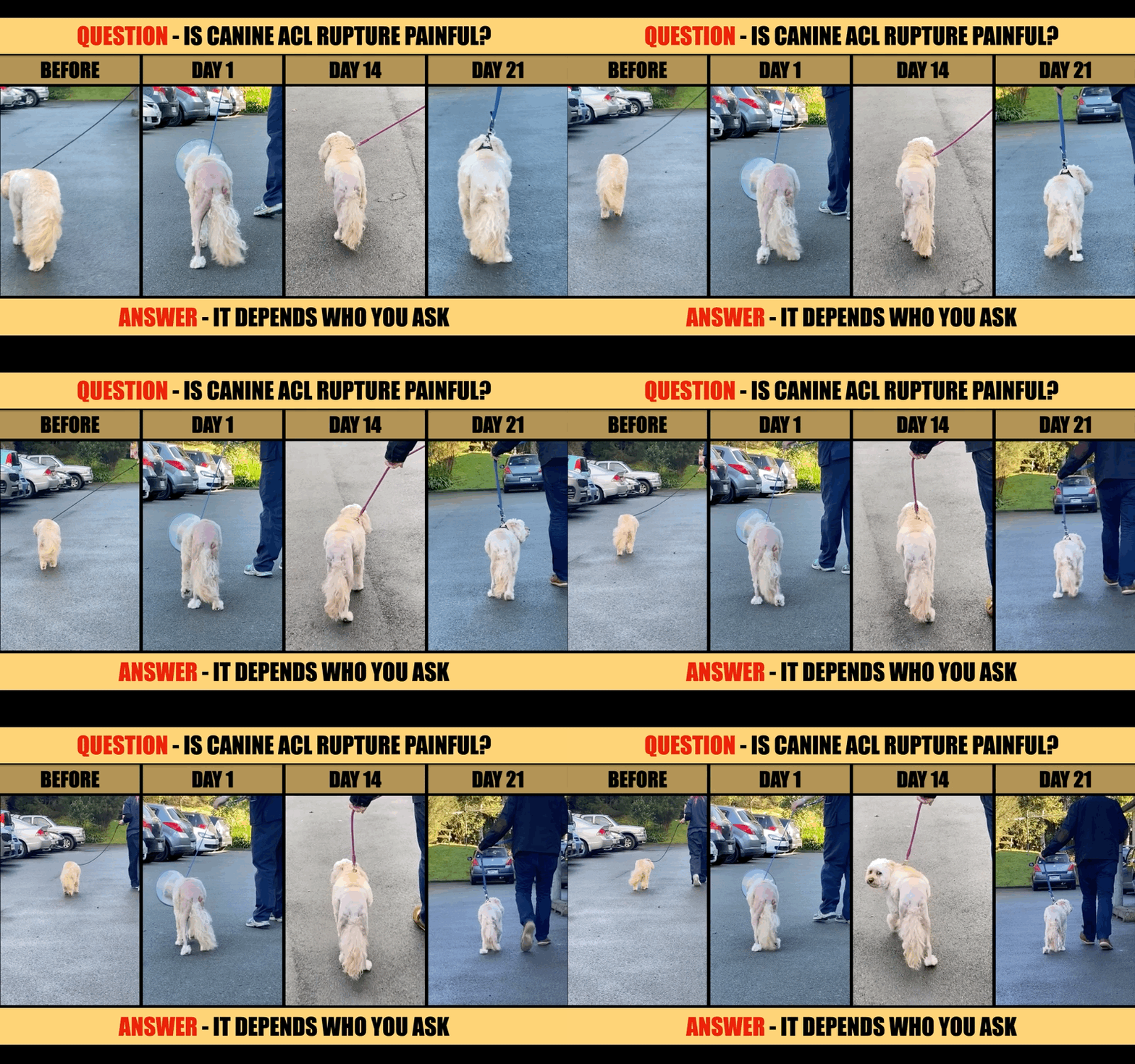
The commonest form of canine ACL injury is gradual degeneration. Affected dogs rarely scream, yelp or whine. They convey feelings of pain using a different language. The following story illustrates the challenges we face when we try to interpret this language.
Picture a patient who we’ll call Lulu. She ruptured both ACL's two weeks apart. Lulu had severe lameness, which was worse on the left. There were two reasons for her lameness. The first was mechanical lameness caused by knee instability. Surgery - in Lulu’s case bilateral TPLO - immediately addresses instability. The second reason for lameness is pain. This is caused by inflammation, which takes 6-12 weeks to resolve after surgery. Lulu's lameness improved within days of her operation. This means, in her case, instability was the primary cause of lameness. Lulu has two owners, who had divergent fears and constraints.
OWNER 1: Peter suffered a bad personal experience with his own ACL reconstruction. Peter didn’t want to take a chance that Lulu might endure a similar experience. Peter wanted to avoid surgery if possible. Even so, he understood it was the best way to relieve Lulu’s discomfort. The easiest way for Peter to resolve his internal conflict was to imagine Lulu was coping well. Peter was hopeful that short-term rest and painkillers would fix her problem.
OWNER 2: Jenny had a good personal experience with knee surgery. She wanted Lulu to have bilateral TPLO surgery as soon as possible. Like Peter, Jenny suffered an internal conflict. She remembered her own ACL injury being very painful. Jenny couldn’t bear seeing Lulu like this. Unlike Peter, Jenny rated Lulu's pain as severe. For this reason, she asked her surgeon if Lulu could have surgery within a week of her assessment.
Lulu's story teaches us that animal pain, like beauty, is seen through the eye of the beholder. Not all ACL injuries are equal, and not all dogs are like Lulu. For example, many have painful cartilage injuries called meniscal tears. Diagnosing a meniscal tear requires an operation or an MRI scan. Fortunately, pain subsides soon after surgical management of a meniscal tear.
WHAT IS ACUTE PAIN?
It’s easy to understand the sharp pain of a stubbed toe or the stabbing pain of a headache. These are examples of acute pain. Surgical pain is another form of acute pain. Compared to chronic pain, which can last a lifetime, acute pain resolves quickly. The rule of thumb for chronic pain is that the best medication is the least medication. With acute pain, it's the opposite. We use combinations of painkillers to maximise comfort.
HOW DO WE LIMIT PAIN?
Anaesthesia is the field where I began my career. It’s a discipline dedicated to preservation of life and comfort. Before becoming a surgeon, I worked as an anaesthetist in three university veterinary hospitals. My team shepherded patients through operations and prescribed sophisticated pain control protocols. As a board certified surgeon, I'm very lucky to work with specialist anaesthetists. The foundation they provide for early recovery makes anaesthetists my most valuable asset. The most important period for pain control is immediately before, during and after an operation. Our best combinations include nerve blocks, injectable painkillers, oral medications, and cold compression therapy.
-

This Boxer had bilateral TPLO. If she could speak, she’d thank her anaesthetist for giving her an epidural. Ask a person who's had one and they'll tell you a story about profound pain relief. We give epidural injections or femorosciatic nerve blocks under general anaesthesia. They enhance safety by reducing the effective dose of anaesthetic drugs. Although numbness lasts under 12 hours, regional blocks have a long-term legacy. Profound surgical pain control means dogs need fewer medications at home. Avoiding oral polypharmacy is valuable because all painkillers have adverse effects. The safest venue for polypharmacy is the controlled environment of a veterinary hospital.
-

Anyone who's taken codeine, tramadol or fentanyl can tell you how effective they are. The human intestine is excellent at absorbing oral opioids. Their journey takes them through the liver, which acts as a filter. Human livers modify opioids and enhance their effect. Dogs are different. Their livers block opioid passage using a process called first pass metabolism. This means powerful drugs like oral tramadol work no better than a sugar pill. Losing an entire group of oral painkillers explains why injectable painkillers are critical. Opioid injections work very well in dogs. If you wonder why we keep dogs overnight, here's your answer.
-

Cold compression therapy (CCT) can reduce post-surgical pain, swelling, and lameness. The effects of cold packs and bandages are only measurable during the first 24 hours after surgery. Two weeks later, the effects of cold compression are too small to measure. My personal preference is menthol-containing bandages (see image above). They have a proven advantage over ice packs after human ACL surgery. Icing knee wounds after 24 hours is controversial because cooling of metal implants has the potential to cause pain. I don't recommend icing at home because it reduces incisional blood flow. This in turn delays healing and predisposes to infection.
ORAL MEDICATIONS
I have postgraduate qualifications in veterinary anaesthesia and surgery. As such, my primary field of interest is pain control. Even so, the following section isn't based on my personal opinion or experience. It's a review of published scientific facts about oral painkillers. If scientific facts don't support use of a popular drug, this doesn't mean I don't want it to work. It means the disadvantages of that painkiller are likely to outweigh its advantages. In my ideal world, every painkiller would have a profound benefit and no adverse effects. Unfortunately, this is impossible. If a medication is powerful enough to produce an effect, it's powerful enough to produce a side effect.
-
![]()
NSAIDS
The only painkiller capable of switching off pain is a regional nerve block. Other painkillers can reduce pain's volume, but they can't switch it off. Non-steroidal anti-inflammatory drugs are our big-hitters. Many canine studies prove NSAIDs hit pain harder than other oral medications. This is an unpopular truth. The average carer doesn't like the idea that 'doggy ibuprofen' is our best painkiller. Unfortunately, this disbelief has triggered misplaced faith in anticonvulsant drugs.
-
![]()
ANTICONVULSANT DRUGS
Gabapentin and cannabidiol (CBD) are anticonvulsant drugs. Both have licenses for use in humans but are unlicensed for use in dogs. Gabapentin is a narrow-spectrum painkiller. This means it’s only powerful against a specific type of pain called neuralgia. A proven benefit for neuralgia does not make gabapentin a broad-spectrum painkiller. Penicillin is an antibiotic, but it doesn't kill MRSA. Gabapentin is a painkiller, but it doesn't kill orthopaedic pain. Systematic reviews show gabapentin has a weak effect after human knee surgery.
-
![]()
PARACETAMOL
In the USA, paracetamol is called acetaminophen. Like gabapentin, it has a human license, but is unlicensed for use in dogs. A licensed paracetamol-codeine product called Pardale-V is available in the United Kingdom. A randomised, controlled trial compared Pardale-V to a NSAID (meloxicam). Pardale-V produced an equivalent quality of short-term pain control following orthopaedic surgery. Paracetamol has earned the right to be our first-choice 'rescue painkiller'. Unfortunately, it suffers a similar limitation to NSAIDs - Carers struggle to accept that paracetamol is more powerful than gabapentin.


UNLICENSED DRUGS
Scroll down and you'll find a list of side effects for a mystery drug. The data comes from the UK National Health Service. It summarises the adverse effects after this drug was given to 323 people. Don’t worry about whether this mystery drug is 'organic', 'pure', or 'natural'. It has a US and UK human product license, so it's passed a barrage of safety tests.

Would you give this mystery drug to your dog? How about if you knew that people who took it long-term were twice as likely to die? Would knowing that this drug elevates dog liver enzymes up to 8x normal make any difference? This drug is Epidiolex (Epidyolex in the USA). It's the purest form of cannabidiol (CBD). How can the purest form of a popular supplement cause so many problems? The answer lies in its purity. A prescription drug’s label has to be accurate. When the label says Epidiolex contains 100mg/ml cannabidiol, it really does contain 100mg/ml cannabidiol. Epidiolex is powerful, and powerful medications produce side effects. CBD supplement manufacturers don't need to guarantee their content. They only need to appeal to our human instinct to help suffering animals. Being realistic is difficult but necessary. A supplement which is too weak to produce any side effects is a weak supplement. As an expert in acute and chronic pain management, I can only recommend treatments with benefits that outweigh their risks. CBD is not one of those treatments. Carers who give CBD alongside a prescription painkiller are acting against the advice of the UK Government’s Committee on Toxicity.
FREQUENTLY ASKED QUESTIONS
-
Picture a reunion between a dog called Frodo and his carer. Frodo was in a veterinary hospital receiving treatment for a non-painful condition. He was anaesthetised, but he didn’t need an operation. Frodo goes crazy whenever he greets his carer. After his hospital visit, Frodo whines and cries for the entire journey home. That evening, Frodo won’t stop whining. His carer knows he should’t be painful but she starts having doubts.
Frodo’s situation is very common. It’s called post-separation anxiety, and it poses a big problem for owners of dogs recovering from surgery. When dogs cry in a veterinary hospital or car, we chalk it off to anxiety. When it happens at home, owners are primed to suspect pain.
A surgeon and owner make a joint decision about the best time for a pet to return home. Surgeons take responsibility for deciding when to stop injectable painkillers. Owners offer advice about how much happier their dog will be at home. Pain control and psychological wellbeing are both important. This means there must always be a compromise. Even so, dogs shouldn’t return home until comfort levels are good.
The easiest way to distinguish pain and anxiety is to take a short walk. Use a confident, reassuring tone to encourage your dog. If whining was caused by pain, the walk won’t help. In theory, walking should make a painful dog whine more. If a patient seems happier on a walk, anxiety was the more likely culprit. Mild anxiety is treated with distraction tactics (e.g. walks and gentle play). Severe anxiety is treated with calming medications (e.g. trazodone).
-
A 2012 study recruited 58 dogs with lameness caused by osteoarthritis. A group of caring owners enrolled their loved ones in a controlled trial testing a new NSAID called deracoxib. The carers knew there was a 50:50 chance that their pet would receive an inactive placebo. Even so, 57% described a visible improvement when they gave the placebo. If you believe you'd have fared better, you might want to reconsider. Over 40% of veterinary specialists were convinced the inactive placebo improved their patients.
-
Nobody should offer a loved one medications without reading the data sheets. These are available online from drugs.com (USA) and NOAH Compendium (UK)
-
Renaissance physician Paracelsus observed that "solely the dose determines that a thing is not a poison". Anyone who's consumed too much chocolate or alcohol understands his point. Even an inactive placebo can cause vomiting and diarrhoea. This phenomenon is so well established that it has a name - the nocebo effect.
My approach to dogs with sensitive stomachs is to reduce the dose of the “poison”. I use a very low dose of a NSAID. Meloxicam is the ideal choice because it's a liquid. This formulation suits a gradually increasing dosing schedule. The very low dose protocol starts 2-3 weeks before surgery. This gives me enough time to gradually increase the dose. Paracetamol is my second choice. I switch to paracetamol if my patient reacts badly to low dose meloxicam. Paracetamol doesn't produce gastrointestinal side-effects and can be combined with low-dose meloxicam.
Gastroprotectants might make a small difference. The most popular choice is a proton pump inhibitor (PPI) called omeprazole. We don’t have much data documenting the impact of omeprazole-NSAID combinations in dogs. If a high-risk person takes omeprazole with their NSAID, there's only a 10% reduced risk of an ulcer. The impact of omeprazole is much lower for moderate-risk patients - 268 people would need to take omeprazole to prevent a single ulcer complication.
-
An ideal surgical painkiller should have powerful positive effects and a short list of tolerable side effects. Gabapentin doesn’t fulfil these criteria. Here are the 4 reasons I don’t prescribe this drug after knee surgery.
Gabapentin is a poor post-operative painkiller: Studies testing the effect of gabapentin on knee surgery pain are not encouraging. Most studies report that gabapentin’s adverse effects outweigh any positive effects. Tap here, here or here for examples. Some studies report a subtle benefit, but this must be interpreted with caution. A subtle benefit is only valuable if a drug has no adverse effects.
Gabapentin frequently triggers intolerable psychological side effects: Somnolence (drowsiness) and dizziness affect 21-28% of people taking gabapentin. Pooled analyses of 199 placebo-controlled anticonvulsant trials (including gabapentin) showed that treated patients had approximately twice the risk of suicidal thinking. Psychological side effects force 9-16% of people to discontinue gabapentin. The only way family members can spot psychological side effects is when a patient describes them. There’s no reason to believe that dogs don’t suffer from depression. Treated dogs often appear sedate and wobbly, just like people. The critical difference is that dogs must suffer in silence. Tap here to read gabapentin’s data sheet. Tap here to read a neurology specialist’s review of gabapentin’s effects and side effects.
Ataxia (wobbliness) is an important problem: The main risks after canine ACL surgery are infection and implant failure. Patients need to be steady on their feet. Taking a fall because they’re drowsy and ataxic is the last thing they need. To avoid ataxia, we should avoid gabapentin. If we want a patient to be less stressed, we can dispense an anti-depressant like trazodone.
Gabapentin causes weight gain: People taking a 6-week course of gabapentin gain an average of 2.2kg (4.9lb). Overweight dogs are significantly more likely to suffer bilateral ACL rupture. Our best chance of protecting the opposite knee is to maintain lean body mass. This task is already daunting because exercise is restricted. Gabapentin can only make the challenge harder.
-
If a surgical site was a car lot, local anaesthetic infiltration would be the traffic warden. They affect drivers by moving from car to car issuing tickets. The obvious problem with this dynamic is that wardens can only ticket cars they have contact with. In real terms, drugs like Nocita can only affect a small portion of an operated knee.
If the surgical site is a car lot, a pain pathway is the road leading to the brain. Epidurals and femorosciatic blocks are like road blocks. The clear advantage is that a police officer can block every single car. The disadvantage relates to accuracy. An officer can only stop cars if she's on the scene. In real terms, epidural injections and femorosciatic blocks are technical procedures. They are very effective in the hands of skilled operators. If a skilled operator isn't available, the risk may outweigh any potential benefit.
Nocita is bupivacaine liposome-encapsulated injectable suspension (BLIS). In 2016, it was approved for veterinary use in the USA. A pilot trial used ACL surgery (lateral suture) to test Nocita's effectiveness. It produced 72 hours of pain control and induced few side-effects. Nocita may be a good option for surgeons who are unable to offer regional nerve blocks. Tap here if you're not squeamish and want to see Nocita in action.
-
To date, medical interventions have failed to make any difference to opposite knee injuries. Researchers assessed prophylactic treatment with joint irrigation, hyaluronic acid injection and oral doxycycline. Unfortunately, this protocol didn’t reduce the risk of ACL injury in the opposite knee. Based on current evidence, owners should focus on maintenance of lean body mass instead of supplements or exercise.